The modern workplace is currently defined by two powerful, yet often confused, phenomena: Quiet Quitting and Burnout. While both result in decreased productivity, they are driven by vastly different internal states.
Misdiagnosing "Quiet Quitting" as laziness or "Burnout" as mere stress can lead to disastrous management decisions, including losing valuable employees.
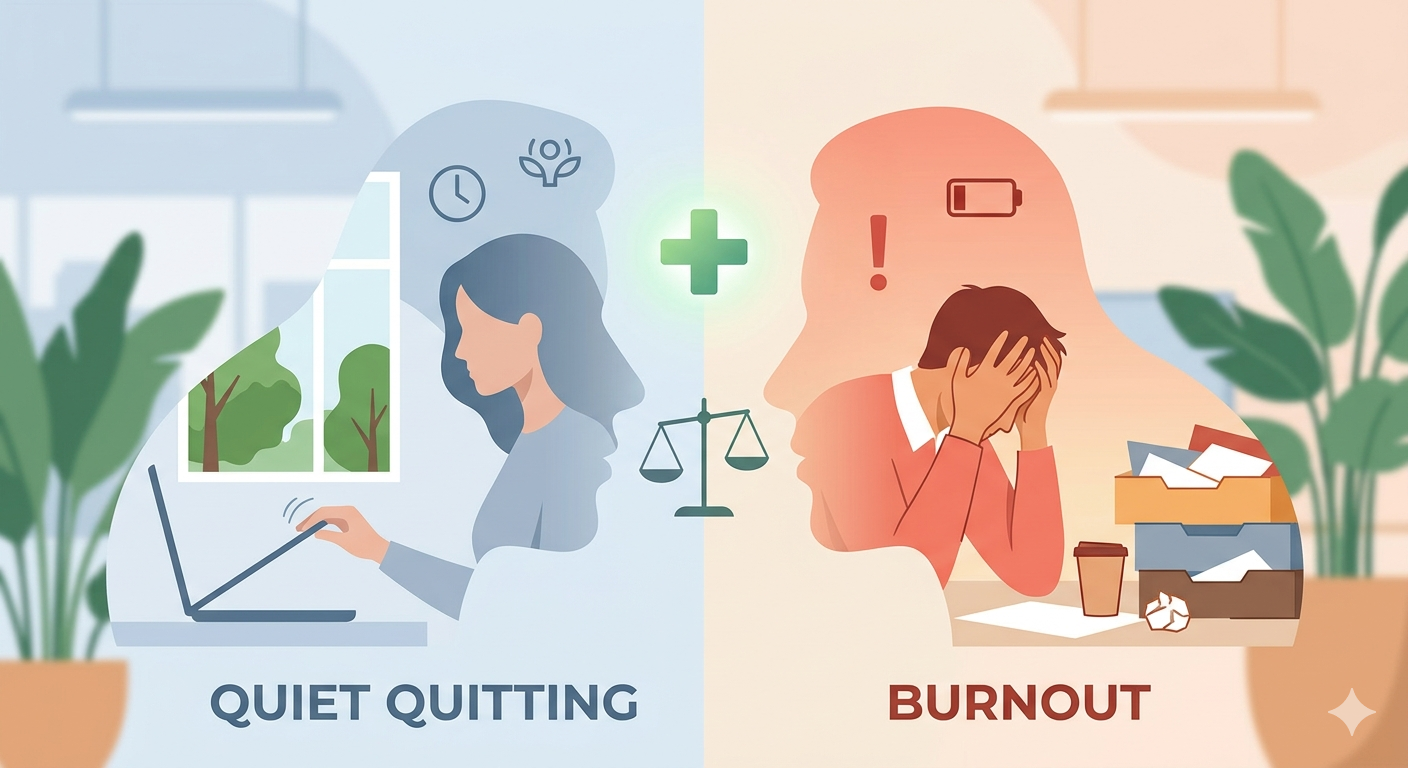
Quiet Quitting is a cultural shift in boundaries. Burnout is a clinical state of exhaustion. Learning to differentiate between the two is the most critical mental health skill a modern manager or HR professional can possess.
1. Defining the Terms
Quiet Quitting is the decision to stop going "above and beyond." The employee fulfills their primary job description and contractual obligations but refuses to participate in "hustle culture." They log off on time, they don't answer emails on weekends, and they do not volunteer for extra projects. It is a protective, boundary-setting mechanism.
Burnout is an official occupational phenomenon recognized by the World Health Organization (WHO). It is characterized by feelings of energy depletion or exhaustion, increased mental distance from one’s job, and reduced professional efficacy. Burnout is the state after boundaries have already failed.
2. The Comparison Checklist: Spotting the Signs
Use this table to quickly assess behavioral shifts in your team or yourself.
Behavior | The Quiet Quitting View (Boundaries) | The Burnout View (Exhaustion) |
Working Hours | Consistently 9-to-5; logs off precisely on time. | Inconsistent; either erratic, long hours (trying to catch up) or frequent lateness/absence. |
Task Completion | Basic duties are met, but no voluntary extras. | Even basic tasks are delayed or contain frequent errors; performance is slipping. |
Communication | Professional but brief. Doesn't participate in non-essential chat or optional meetings. | Avoidant, cynical, or uncharacteristically irritable. May stop responding entirely. |
Emotional State | Often calm, focused on life outside of work. The boundary brings relief. | Overwhelmed, anxious, hopeless, or emotionally detached. The work brings dread. |
Primary Driver | Preserving work-life balance. | Lack of resources (time, support, autonomy). |
3. How to Respond
The response strategy must be tailored to the diagnosis.
If it’s Quiet Quitting: Engage in an honest conversation about career growth and compensation. Respect their boundaries (they are actually healthy), but ensure their defined role is sustainable and clear.
If it’s Burnout: Intervention is required. This may mean mandating time off, reducing their workload, assigning a temporary mentor, or leveraging the company’s Employee Assistance Program (EAP). It is a health issue, not a performance issue.